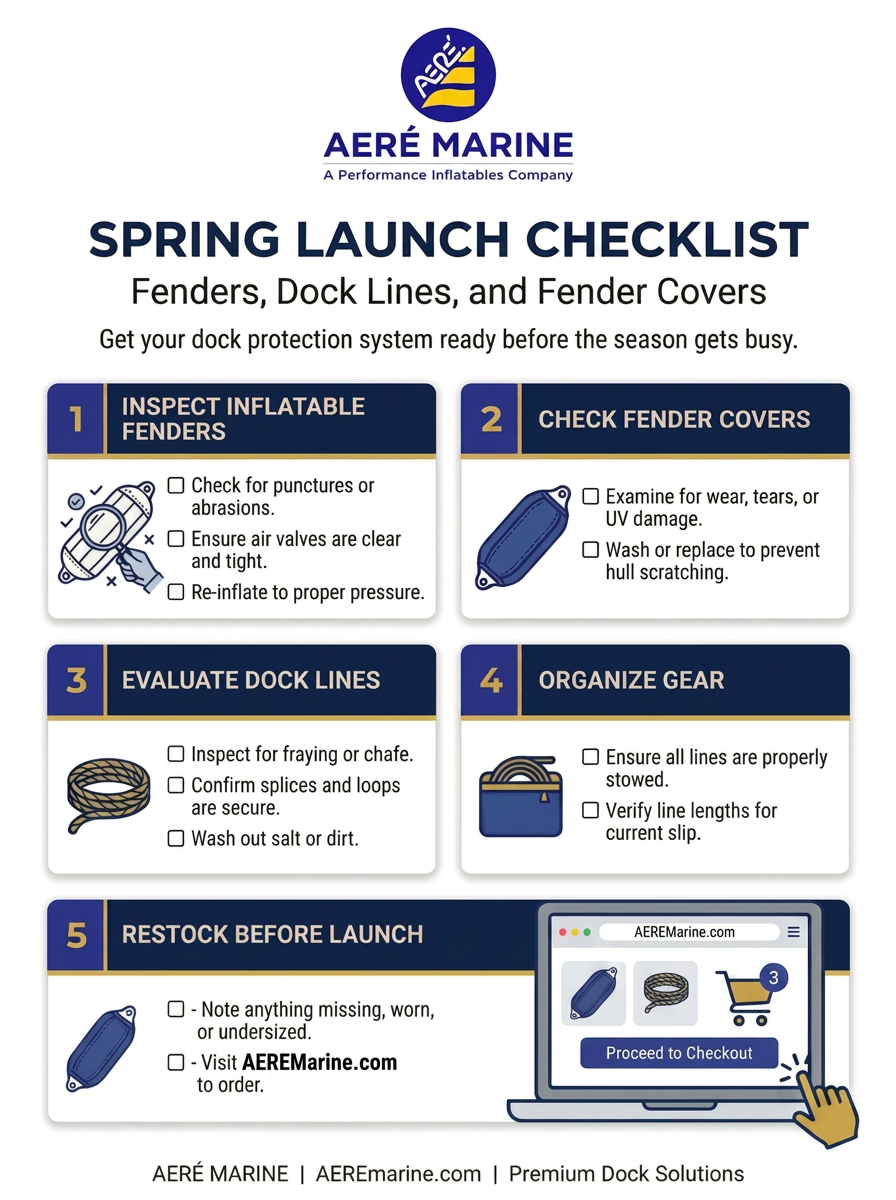
Quick Guide: Spring Dock Protection Setup in 6 Steps
- Inspect every fender for stains, cracking, valve issues, and worn attachment points.
- Confirm boat fender size and count before launch day, not after your first rough docking.
- Replace tired dock lines with the right diameter and length for your boat and slip.
- Fit fresh Fenda-Sox for added abrasion protection and a cleaner dockside look.
- Test your pump, valves, and fender lines so your system is actually ready to work.
- Stage a complete protection setup with inflatable fenders, dock lines, fender lines, and backup gear before the season gets busy.
Spring prep is not just about washing the hull, changing fluids, and hoping for the best. If your docking gear is faded, undersized, frayed, or mismatched, you are carrying last season’s problems straight into peak boating months. The owners who avoid preventable dock rash, ugly fender marks, and sloppy-looking slips are usually the same ones who take spring commissioning seriously. They inspect the whole protection system, not just the shiny parts. (See our Spring Launch Checklist)
That matters because your dockside setup does two jobs at once. First, it protects the boat. Second, it shows how well the boat is cared for. Clean boat fenders, properly sized dock lines, and fitted boat fender covers make a boat look ready for the season. Dirty, collapsed, or mismatched gear does the opposite.
Do Not Skip Essential Safety Checks
Spring commissioning should cover more than fenders and dock lines. Before launch, make sure your required safety gear is onboard, accessible, and in good working order. That includes checking life jackets, confirming visual distress signals are current where required, and making sure your fire extinguishers meet current U.S. Coast Guard requirements. For fire extinguishers, that means verifying they are the correct approved type, readily accessible, not expired or previously used, and free of obvious problems like a bad gauge reading, missing pin, blocked nozzle, or visible corrosion. Federal carriage requirements are the minimum standard, so it is also smart to confirm any additional state-specific rules before the season starts. Fire Protection for Recreational Vessels 33 CFR § 175.320 Fire Extinguishing Equipment Required
Start with the fenders you already own
Before you buy anything, audit what is already on board. Pull every fender out and look at it in daylight. Check for surface cracking, discoloration, permanent grime, worn lines, damaged valves, and soft spots that suggest the fender is no longer holding pressure the way it should. If you are running inflatable boat fenders, confirm they still inflate quickly and hold pressure overnight. If they do not, fix that now, not when you are coming into a crowded marina on Memorial Day weekend.
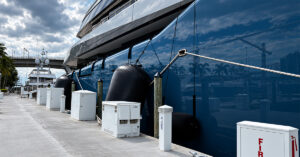
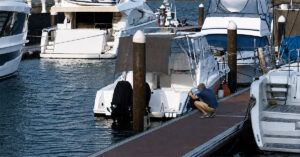
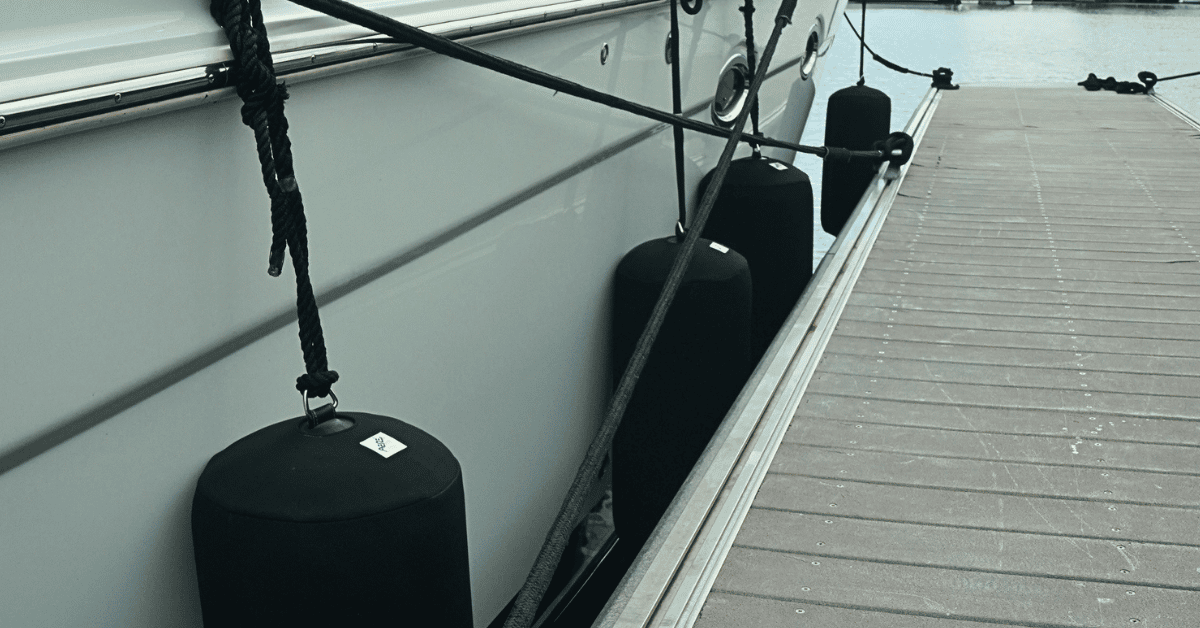
AERÉ’s installation guidance is straightforward: carry one fender for every 10 feet of boat length, always with a minimum of three fenders. Place the first at the widest part of the vessel, then position the others forward and aft. For smooth piers, floating docks, and bulkheads, vertical hanging is the standard setup, with the fender sitting just a few inches above the waterline so it protects the hull without dragging in the water. (See: How to Install Inflatable Fenders)
That rule of thumb sounds basic, but plenty of owners ignore it. They carry too few fenders, use the wrong boat fender size, or leave last year’s badly stained gear in rotation because “it still works.” Maybe. But working poorly is still working poorly. If the fenders are undersized or covered in grime, they are not doing your hull, or your overall look, any favors.
Decide what gets cleaned, what gets covered, and what gets replaced
This is where spring prep gets honest. Some fenders need a wash. Some need covers. Some are done.
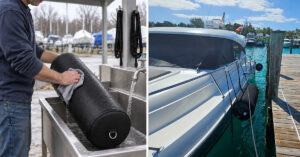
If the fender body is structurally sound but looks worn, Fenda-Sox is the easy fix. Covers do not just improve appearance. They protect your hull from abrasion and scuffing and clean up the overall presentation of the boat at the dock. That matters more than people admit. A freshly detailed hull next to dirty fenders looks unfinished. Detail-oriented owners notice it immediately.
AERÉ Fenda-Sox is a great way to upgrade both protection and appearance. The covers are available in polyester knit and neoprene, come in multiple colors, and are machine washable for easy maintenance following AERÉ’s care guidelines.
That makes them a practical refresh whether you are rebuilding a full AERÉ setup or just trying to keep worn fenders from hurting the boat’s dockside presentation. (Shop: AERÉ Fenda-Sox)
Don’t own AERÉ fenders? No problem. AERÉ can custom make Fenda-Sox covers for non-AERÉ fenders. Measure your fender and submit a request through the Custom Fenda-Sox Quote form to ensure the right fit
If you are looking at old stains, fading, or fenders that have gone from “used” to “worn out,” spring is the right time to stop rationalizing and replace them. That is especially true for owners moving into a more active cruising schedule, rafting more often, or docking in unfamiliar marinas all summer long. Bigger plans need better gear.
Choose dock lines for the boat you have and the slip you use
A lot of boat owners give more thought to wax than dock lines, which is backwards. Dock lines are your safety system when the boat is not moving. They keep your vessel from surging into a piling, drifting into a neighbor, or loading the cleats incorrectly when conditions change.
AERÉ’s dock lines are built from double-braided nylon and come with a built-in eye splice, which is exactly what you want for secure, fast attachment at the cleat or piling. Their sizing runs from 1/2-inch lines for 30′-40′ boats, to 5/8-inch for 40′-55′, 3/4-inch for 55′-65′, and 1-inch lines for 65’+ vessels, with multiple length options across each range. That is useful because “one size fits all” dock lines are not realistic. Boat size, weight, slip layout, tide swing, wake exposure, and dock height all matter. (Shop: AERÉ Dock Lines)
If you keep the boat in a floating dock slip, line length can usually be more compact because the dock moves with the boat. If you are tied to a fixed pier, piling, or tidal dock, you need more adjustment room and better shock control. In higher current or higher wake environments, this is where properly sized docking spring lines matter. They help control fore and aft movement, reduce surging, and keep the boat from loading the wrong lines when wind or current shifts.
The practical spring prep move is simple: inspect every line for fraying, UV stiffness, chafe, flattening near the splice, and hardware damage. If you are hesitating, replace it. Old dock lines do not fail on calm days. They fail at 2 a.m. during bad weather.
Build a complete protection system, not a pile of parts
This is the part owners skip. They buy a couple of new fenders, maybe replace one line, and call the boat ready. That is not a system. That is a pile of unrelated parts.
A real spring protection setup includes:
- properly sized marine boat fenders
- matching fender lines
- dock lines sized for the vessel and slip type
- clean or new marine fender covers
- a reliable inflator
- backup lines and a spare attachment plan
If you want your spring setup handled before the season gets chaotic, treat dock protection like a system, not a pile of random gear. That means checking your fenders, replacing worn dock lines, fitting clean fender covers, and making sure your pump and accessories are ready to go before launch day. When all four are dialed in together, the boat is better protected, the dockside setup looks sharper, and you are not scrambling to fix small problems after the season starts.
That last point matters more than it sounds. If you are running AERÉ inflatable fenders, test the pump before the season starts. Do not assume it still works because it worked in September. Stage it with the fender bag. Confirm the adapter is there. Inflate every fender once. Deflate them. Repack. That 20-minute drill is the difference between a professional setup and a last-minute scramble at the dock.
Do not ignore appearance, because appearance usually tracks maintenance
Some owners act like appearance is vanity. It is not. In docking gear, appearance usually reflects maintenance.
Clean, correctly hung fenders usually mean someone checked sizing, pressure, attachment points, and placement. Dirty fenders, stretched lines, and mildew-covered covers usually mean nobody looked closely. That is why spring is the right time to refresh the visible pieces, too. The clean dock look is not just aesthetic. It is usually the result of a system that has been checked, cleaned, sized, and reset properly.
If you want the boat to look sharp this summer, stop treating dock protection like an afterthought. Good boat fenders, clean fender covers that owners are proud to leave hanging at the dock, and properly selected dock lines are the finishing touch. They separate the boat that looks used from the boat that looks deliberately maintained.
The right time to refresh is now
Spring is the right time to go through your dock protection setup before the boat is back in regular use. It gives you a chance to inspect what you already have, replace anything that is worn out, and make sure your fenders, dock lines, covers, and pump are all ready before the busy part of the season begins.
The process does not need to be complicated. Check your fenders for wear, confirm the right boat fender size for your vessel and slip, replace tired dock lines, clean or replace your fender covers, and test your pump before launch day. Taking care of those basics now helps protect the boat all season and leaves you with a dockside setup that looks clean, consistent, and well-maintained.
FAQ: Spring Boat Prep, Fenders, Dock Lines, and Fender Covers
1. How many boat fenders should I carry for spring launch and summer docking?
Use the rule of thumb AERÉ gives: one fender for every 10 feet of boat length, with a minimum of three fenders. If you raft often, travel, or dock in unfamiliar marinas, carry extra.
2. How do I know if my dock lines need to be replaced?
Replace them if you see chafe, UV stiffness, flattening near the splice, fraying, or any loss of flexibility. Spring is the right time to replace questionable lines before heavy seasonal use begins.
3. Are boat fender covers just cosmetic, or do they actually protect the boat?
They do both. AERÉ Fenda-Sox protects your hull from abrasion and scuffing while giving your dockside setup a cleaner, more finished look. They are a practical upgrade, whether your fenders are brand new or just in need of a refresh.
4. What material should I choose for dock lines?
AERÉ recommends double-braided nylon because it offers strength, elasticity, and reliable performance for docking and securing your vessel. AERÉ dock lines also include an eye splice for easier fastening.
5. Can I use Fenda-Sox on non-AERÉ fenders?
Yes. Measure the fender’s diameter and length first, then match the cover accordingly to any of our fenda-sox products. If we do not carry your size we can custom make them to fit your fender. View the Non-AERÉ Fender Measurement Guide.