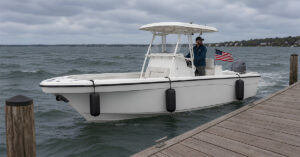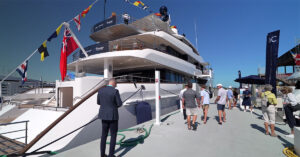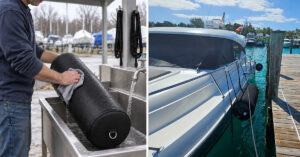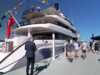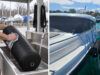
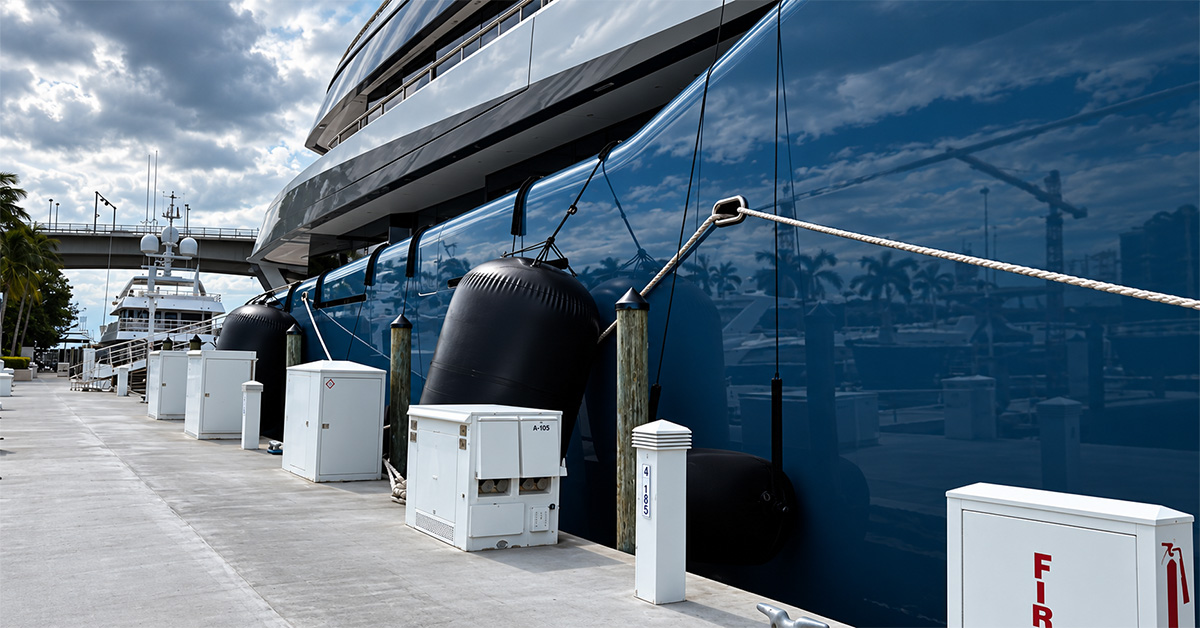
Arriving at your vessel after a few days away only to find a fender dangling uselessly above the rub rail is a frustration you may know all too well. This sight is a clear warning sign that your hull is exposed. When a fender sits out of position, your boat is unprotected against the dock, pilings, and abrasive movement caused by wind and current. Without a reliable cushion, even a minor change in tide or a passing wake can damage your hull gelcoat.
Understanding why this happens is the first step toward correcting it. Fenders rarely move on their own. They shift because the forces acting on your vessel, including friction and improper tension, overpower the way they were initially deployed. By diagnosing these mechanical issues and adjusting your setup, you can ensure your boat stays protected regardless of the conditions.
Diagnosing the “Ride Up” Problem
The primary reason fenders climb is physics. When a vessel slides against a dock or piling, the hull’s contact surface creates upward friction. As the boat moves, this force pushes against the cylindrical shape of the fender, naturally causing it to roll or force itself upward. If your setup is not configured to counteract this, the fender will inevitably migrate out of the critical protection zone.
Several factors contribute to this migration:
- Improper Inflation Pressure: This is the most frequent culprit. Over-inflated fenders become too rigid, acting like balls that roll away from contact points. To test proper inflation, push on the wall of the fender with your finger; it should easily compress about 1/2 inch. If it feels very hard, it is more inflated than necessary. Fenders with insufficient pressure lack the internal tension required to hold their shape against the hull, allowing them to slip out of position.
- Incorrect Hanging Height: Positioning is critical. Fenders should be hung so they sit just a few inches above the waterline. If they are too high, they are already on their way to losing contact. If they are too low, they accumulate grime and debris from the water, which can damage your hull finish over time.
- Poor Placement: If you do not secure the first fender at the vessel’s widest point, often called the beam, the boat is free to pivot. This movement creates uneven pressure that pushes other fenders out of alignment.
For those looking to refine their setup, choosing the right type of boat fender for your specific docking environment is essential. Not all materials or shapes respond to friction in the same way, and the correct choice is your first line of defense.
Quick Fixes for Floating Docks
For standard docking against smooth piers or bulkheads, the vertical installation of your inflatable fenders remains the industry standard. It provides a reliable cushion that moves with the vessel, keeping the hull protected as the boat rises and falls with the tide.
To stabilize your vertical setup:
- Prioritize Distribution: Use at least three fenders, regardless of the vessel’s size. A single point of contact is rarely enough to manage the forces of wind and tide. Place one near the stern and another at the widest point of the hull, with a third positioned between them to spread the load.
- Choose the Right Orientation: Cylindrical fenders can hang vertically or horizontally. For horizontal hanging, thread the fender line through both eyes. This spreads more surface area along the hull and works well for rougher conditions, uneven surfaces, larger hulls, or rafting up with other boats.
- Use Reliable Knots: The strength of your setup is only as good as the knot holding it to the rail. A clove hitch is excellent for quick adjustments, but for longer stays, a round turn with two half hitches or a proper running hitch ensures the line does not slip.
- Check Tension Regularly: A secure knot cannot compensate for a slack line. Ensure your lines are taut enough to hold the fender firmly against the hull without pulling it out of its vertical position.
- Simplify with an Adjuster: If tying and retying knots is not something you want to deal with, the Adjustable Fender Mate secures and adjusts fenders on a rail, stanchion, lifeline, or cleat without a knot. It fits fender lines up to 1/2 inch in diameter, and you can still add a single knot underneath it for extra hold in rough conditions.
The Role of Proper Sizing
Stability is often a function of size. Many boaters under-size their fenders, assuming a smaller diameter is sufficient for their vessel. In reality, undersized fenders lack the necessary surface area to remain stable against the dock. Because they have less contact area, they are significantly more prone to rolling or being pushed out of place.
As a general rule, match your fender diameter to your vessel’s length using the AERÉ Fender Size Guide. For larger yachts, typically those in the 60 to 100-foot range, an 18-inch diameter fender provides the footprint needed to withstand the forces encountered at the dock.
AERÉ’s sizing guidance determines fender count and size by overall boat length. Using the proper size and quantity of boat fenders ensures the load is distributed evenly across your vessel.
The Fixed Piling Challenge
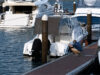
While vertical boat fenders work well in many standard docking situations, fixed pilings create a different contact pattern as water levels change. As the vessel moves up and down with the tide, the point of contact shifts along the piling, so protection that stays attached to the boat may not stay aligned with that impact zone. In those conditions, the better approach is to match the protection method to the docking structure.
That is where a piling-mounted solution fits. AERÉ’s Piling Fender is built for permanent or portable installation on pilings and is designed to protect the rub rail when entering or exiting slips with fixed pilings. Because the protection is mounted directly to the structure, it stays in place at the contact area as tidal conditions change, making it a practical option for boaters who dock regularly in piling-based slips.
Protect Your Hull with the Right Setup
Consistent protection comes down to proper gear setup: sizing, inflation, and secure lines. Choosing quality boat fenders and maintaining correct inflation levels helps ensure your vessel stays safe in any docking condition.
For most docking scenarios, a well-managed vertical setup is sufficient. However, if you are tired of checking lines after every tide change or returning to a boat that has shifted against fixed pilings, it is time to move your protection to the dock. Investing in a permanent piling fender solution turns a constant source of maintenance into a set-it-and-forget-it system, ensuring your vessel is protected every hour of the day.
Frequently asked questions (faqs)
Fenders shift upward due to the continuous rolling motion of the vessel combined with improper line tension. A boat moving against a fixed dock creates friction that forces cylindrical objects toward the path of least resistance. Tying the equipment with excess slack allows wave action to easily push the protective gear out of its designated position and over the rub rail.
Hull design heavily influences how docking gear behaves in the water. Many boats feature flared bows and angled sides engineered to deflect incoming waves. This outward curvature creates a wedge effect against the dock surface. Downward pressure from the rolling vessel pushes standard vertical fenders upward along the slope of the hull. The steep angle squeezes the equipment completely out of place during heavy tidal movements.
Using the attachment points on both ends of the equipment provides the highest level of stability. AERÉ inflatable fenders feature heavy-duty stainless steel D-rings at the top and bottom. Securing a primary line from the top ring to the vessel cleat holds the suspended weight. Attaching a secondary line from the bottom ring to a lower dock piling creates downward tension. This two-point rigging technique eliminates vertical shifting during rough weather.
Undersized equipment lacks the necessary mass to maintain a stable position between the boat and the dock. Small fenders frequently pop out from under the rub rail when subjected to strong wind loads. Selecting the correct diameter ensures the gear has enough surface area to grip the hull effectively. Captains must calculate the appropriate volume based on the overall length and weight of the vessel to keep the equipment firmly planted.
Maintaining the exact height requires knots that refuse to slip under alternating tension. The clove hitch provides an excellent temporary hold for quick adjustments upon arriving at the marina. Captains requiring long-term security prefer the round turn with two half hitches. This specific knot tightens upon itself as the load increases. Securing the line with proper knotting techniques guarantees the equipment remains precisely where the crew sets it.