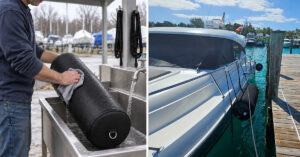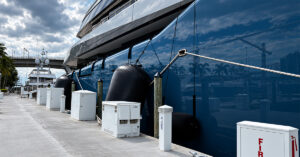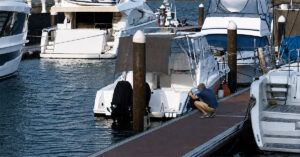
We have talked about fenders in all of their glory time and time again. Anything that protects your boat deserves some serious recognition, hence why we focus on fenders so often. However, if you do not know how to properly install and hang your inflatable fenders, they are incapable of doing what they do best: fending you off from another vessel, dock or any type of obstruction. So, we are going to focus on how to correctly install inflatable fenders.
Before going about the installation process, it is important to understand how many fenders you need. The rule of thumb is one fender for every ten feet (300 cm) of waterline, while also always having a minimum of three fenders. Once you have your necessary fenders and assuming all of them are correctly sized to your boat, inflate them. Then, place one fender at the widest part of your vessel. The widest part is the one that will bump into something first along the sides. After this, place the other fenders forward and aft. These fenders should be hung to the lowest part of your vessel. Once all the fenders are placed, they should be tied to cleats. There are three types of basic knots that all work just as well to secure a fender—the running hitch, the clove hitch and the round turn/half hitch.
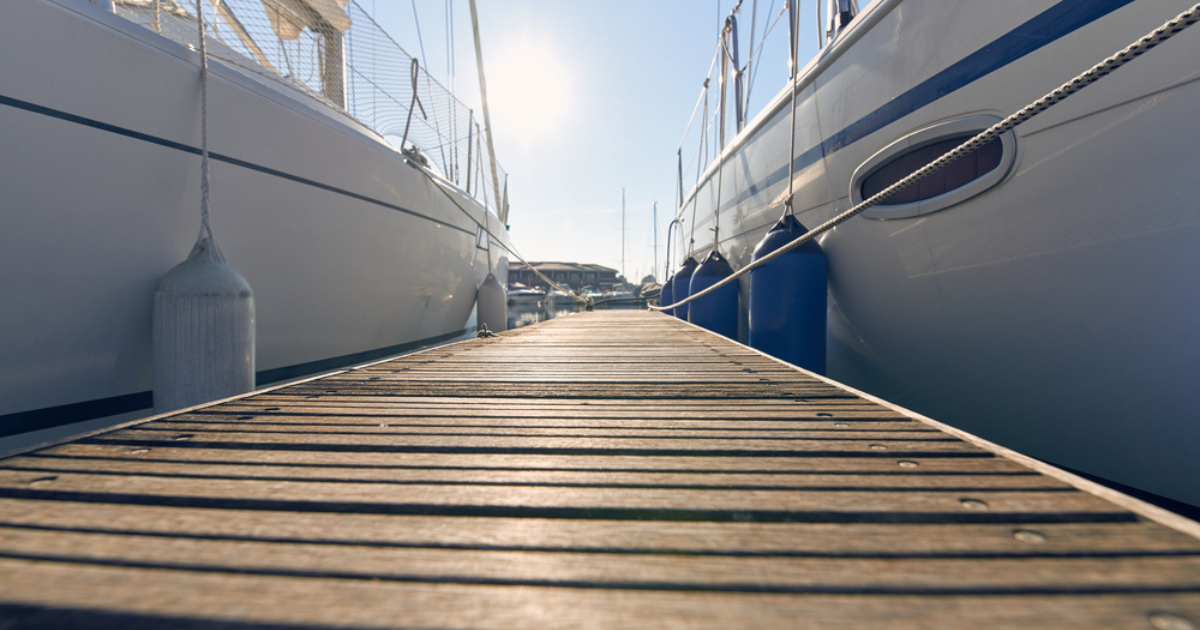
If you are rafting with other boats, be sure to use the largest-diameter fenders that you have since different boats rock in different ways and have different freeboard and hull flare. In this scenario, large-diameter ball fenders should be installed from the rail or cleats over the topsides to keep rub rails from knocking together. If your boat is tied up to either a smooth-surface pier, a floating, or bulkhead dock, install your inflatable fenders vertically, as this is the easier and most practical way. The fender should be placed just a few inches above the surface in order to keep it from getting gunked up. In this situation, the more fenders the better, as this just means less of a chance of hull damage.
As you can see, installing inflatable fenders is not difficult, there are just little things to remember and keep in mind throughout the process. Installing inflatable fenders just a few times is perfect practice and will ensure your boat is as protected as possible. Browse our collection of inflatable fenders today!
FAQs
How many fenders do I need for my boat?
The standard rule of thumb for boat protection is to have one fender for every 10 feet (300 cm) of waterline. Regardless of the vessel’s length, you should always maintain a minimum of three fenders to ensure adequate protection against docks and other obstructions.
What is the rule of thumb for fender spacing?
When installing fenders, you should place the first fender at the widest part of the vessel, as this is the point most likely to make contact with a dock or another boat first. Additional fenders should then be spaced forward and aft of this center point to protect the rest of the hull.
Should fenders hang vertically or horizontally?
If you are tying up to a smooth-surface pier, a floating dock, or a bulkhead, you should install your fenders vertically. Vertical orientation is the most practical and common method for standard docking. However, when rafting with other boats, large-diameter ball fenders may be used to keep rub rails from knocking together.
How high should fenders hang above the waterline?
Fenders should be hung so that they are just a few inches above the water’s surface. This positioning provides maximum protection for the hull while preventing the bottom of the fender from getting “gunked up” by marine growth or debris in the water.
What type of line should I use for fender attachment?
While the specific material isn’t mandated, fenders should be securely tied to the vessel’s cleats using reliable knots. AERÉ Docking Solutions recommends three specific knots for securing fender lines: the running hitch, the clove hitch, or a round turn with two half hitches.
Can I leave inflatable fenders deployed year-round?
While the blog emphasizes that fenders protect your boat from damage, they must be properly maintained and clean. Fenders deployed vertically just above the waterline avoid accumulating marine “gunk,” which helps extend their life. For year-round use, ensure they are correctly sized and inflated to provide consistent protection.
How do I adjust fender height for different dock heights?
Fenders should be hung from the lowest possible point on the vessel (like a cleat) that allows them to remain at the point of contact. Because different docks have different heights, you should adjust the line length so that the fender consistently protects the widest part of the hull or the specific area vulnerable to the dock structure.