Dragging a boat across sand, mud, or a rough shoreline is one of those jobs people tolerate until they finally decide they are done with it. It takes more effort than it should, it is harder on the hull than it needs to be, and it tends to happen at the exact moment when everyone is already carrying enough gear.
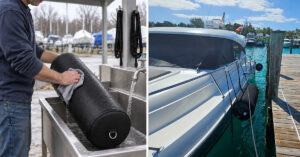
That is exactly why we offer the AERÉ Inflatable Beach Roller. It is a simple tool with a clear job. Get the boat moving cleanly over ground that would otherwise slow you down. Our beach roller measures 9 inches by 60 inches, is built from heavy duty reinforced fabric, supports up to 2,000 pounds, and uses a large air valve for quick inflation and deflation. It is made to help roll a boat to or from the water over sand, mud, or rocks, then deflate and store with minimal fuss when the job is done.
Used correctly, it saves effort, reduces hull abuse, and makes launch and recovery feel a lot more controlled.
Start with the setup, not the push
For a quick visual reference, you can also view our AERÉ Beach Roller Quick-Start Guide.
A beach roller works best when the path is thought through before the boat starts moving. Look at the route from trailer, rack, beach, or shoreline to the water. Pay attention to soft sand, muddy spots, uneven ground, shells, sharp rocks, exposed roots, or anything that could interrupt the roll.
You do not need the route to be perfect. You do need to know where the awkward spots are.
Clear obvious debris first. That includes loose hardware, sharp scrap, sticks with broken ends, and anything that could puncture or scrape gear. The roller is built from reinforced material and designed for real shoreline use, but common sense still applies. If you see something sharp enough to damage inflatable gear, move it or work around it.
Inflate it fully enough to do the job
The AERÉ Inflatable Beach Roller uses a large air valve, so setup is straightforward. Inflate it until it is firm and shaped to carry the load cleanly. You want the roller to support the boat, rotate smoothly, and keep its form across uneven ground.
This is not the place for a half-inflated guess.
A soft roller will flatten too much, drag instead of roll, and make the whole process harder than it needs to be. A properly inflated roller gives you cleaner movement and a more predictable transfer of weight.
If you want the setup to move quickly, keep one of our inflators nearby. The AERÉ 18V Inflator is the easy portable option for this kind of work, especially if you are launching away from power. If your setup already includes dedicated inflation gear, this is one more reason to keep it charged, packed, and ready.
Position the roller the right way
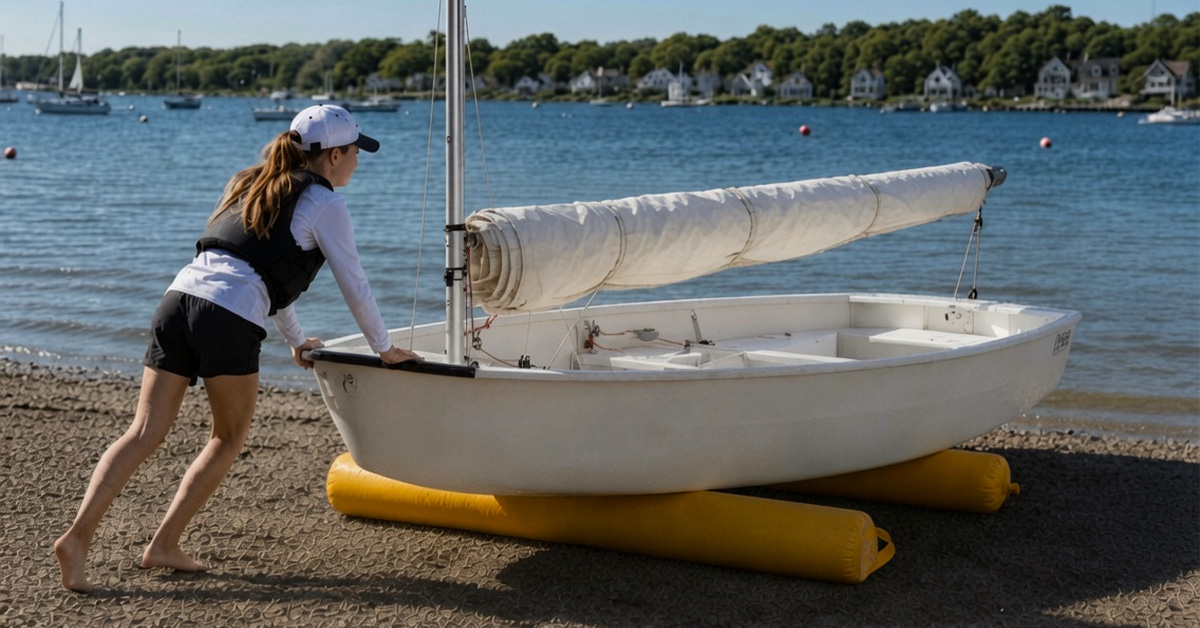
The roller should sit crosswise under the boat, perpendicular to the direction of travel. Create a moving contact point under the hull to support the boat’s weight.
For smaller dinghies and lightweight boats, one roller may be enough depending on the surface and the distance. For longer carries or heavier loads, the process gets easier when you work methodically and keep the roller moving forward as the boat advances.
The first placement matters. Start under a strong, balanced part of the hull where the load will settle cleanly and the boat can begin moving without twisting. If the bow is light enough to lift and guide, set the roller under the section that lets you control the boat while still carrying the weight effectively.
Focus on smooth movement with steady control.
Roll the boat forward in stages
Once the roller is positioned, begin moving the boat forward steadily. Keep the hull centered on the roller as much as possible. If you are working with another person, one of you can guide and stabilize while the other advances the roller as it comes free behind the boat.
That is the rhythm that works.
Push or pull the boat forward. Let it travel over the roller. As the roller comes out behind the transom or aft section of the hull, pick it up, move it ahead, and place it back under the next section of the path. Repeat that sequence until the boat reaches the water or the shoreline staging point.
The method is straightforward. Keep the roller perpendicular. Keep the boat balanced. Keep moving the roller forward.
Pro Tip: Using two rollers and leap frogging them under the hull speeds things up. As the boat clears the rear roller, move it ahead of the front one, keeping a rolling contact point under the hull at all times instead of stopping to reposition a single roller.
Sand, mud, and rocks each ask for something different
The product is built to help move boats over sand, mud, or rocks, but those surfaces do not behave the same way.
On sand
Sand is usually the easiest environment for the beach roller. The key is keeping momentum consistent and not letting the hull sink into one spot while you pause too long. Soft beach sand still creates resistance, so staying organized matters. Place the roller cleanly, move the boat, reposition, repeat.
On mud
Mud can turn a short move into a messy one if you rush it. The roller helps by reducing the suction and drag that happen when the hull settles into soft ground. Go slower here. Watch your footing. Keep the roller aligned and avoid sudden sideways loading that can make the boat shift unpredictably.
On rocks
Rocks require the most judgment. The beach roller is built for this kind of terrain, but rocky ground is still the place where you pay closest attention to sharp edges and uneven support. Pick your path carefully. Avoid letting the hull drop between hard contact points. Use controlled movement, not force.
The roller provides an efficient way to move the boat over rough ground. Observe the terrain as you move.
Launching is only half the story
Most people picture the trip to the water first. Recovery is where the beach roller often proves its value.
By the time recovery rolls around, boats feel heavier, crews are more tired, and nobody has more patience than they had in the morning. That is when a tool like this earns its place in the loadout. Set the roller under the hull, walk the boat back in stages, and keep the movement organized, protecting the hull during the return trip.
That matters for dinghies and small boats that get launched frequently. It also matters for anyone using beach access points where ramps and hard launch surfaces are not part of the plan.
Keep the hull and the roller working together
A beach roller works best when the hull is clean enough to move smoothly and the contact path under the boat is not cluttered with grit, shells, or debris.
If the hull has picked up sand, muck, or sharp grime during the weekend, rinse it off before storing. Do the same for the roller. Salt, mud, and sand left in place have a way of shortening the useful life of gear that otherwise holds up very well.
After use, deflate the roller through the large air valve, roll it up, and stow it where it will stay clean and easy to access. That low-storage footprint is part of the point. It handles a real job, then gets out of the way when the job is done.
A launch dolly has to be wheeled, stored, and kept somewhere with room to spare. The roller skips that step entirely, tucking into a trunk, locker, or gear bag without needing a dedicated spot.
Who gets the most value from it
The AERÉ Inflatable Beach Roller makes sense for more than one type of boater.
It is useful for:
- dinghy sailors launching from beach or shoreline venues
- parents supporting youth sailing circuits
- yacht owners moving a dinghy across sand or mixed shorelines
- boaters dealing with soft mud access
- anyone moving a boat across difficult terrain
It is especially useful at unfamiliar venues. That is where transport problems show up fast and where compact, purpose-built gear saves the most time.
It also makes a practical backup to keep packed even at venues with a known ramp or dolly-friendly launch, in case the beach access turns out rougher than expected or a crowded launch area leaves little room to maneuver.
Pair it with the right inflator and keep the whole process easier
The beach roller is simple by design, which is a big part of its appeal. Still, the experience gets better when you keep the inflation side easy too. A portable setup like the AERÉ 18V Inflator makes quick work of pre-launch inflation and helps keep the roller ready without turning setup into another chore.
That pairing makes sense because both products solve the same kind of problem. Less hassle. Faster setup. More time spent actually boating.
Use it right, and the difference is obvious
A good tool should remove friction from a task you already do. That is exactly what the AERÉ Inflatable Beach Roller is built for.
Inflate it properly. Position it crosswise under the hull. Move the boat in controlled stages. Advance the roller forward as the boat progresses. Pay attention to the surface. Keep the process organized. Then deflate it, roll it up, and store it until the next launch.
That is the whole idea.