A weekend on the hook can feel like the best kind of boating. No marina traffic. No dock carts rattling by at sunrise. No race for shore power. You pick the view, settle in, and let the boat become the destination.
That version of the weekend is real, but it depends on preparation.
We see the same pattern every season. The crews who sleep well at anchor usually made good decisions long before sunset. They matched the anchor to the bottom, paid attention to scope, checked swing room, brought enough lines, and staged the right protection gear for the moments when the plan changes. Because it will. Wind shifts. A friend wants to raft up. A mooring field gets tighter than expected. A squall pushes through at 2 a.m. A quiet cove turns into a busy anchorage by midafternoon.
Anchoring out rewards the boat that is ready for options. If you’re learning how to anchor a boat overnight, preparation matters just as much as the anchor itself.
Download our Anchoring Out Checklist to ensure you have everything you need before you head out.
Start With the Ground Tackle That Suits Where You Boat
The first question is simple. What kind of bottom are you anchoring in most often?
Mud, sand, grass, shell, and mixed bottoms all ask different things from an anchor. There is no single anchor that wins everywhere, which is why smart captains think in terms of local conditions first and brand loyalty second. If you spend most of your time in soft mud, your setup should reflect that. If your summer weekends involve weedy anchorages, shallow coves, or tidal current, those factors matter too.
Anchor size matters. Rode setup matters. Chain length matters. So does the condition of everything between the anchor and your bow cleat. A clean weekend on the hook starts with confidence in the system below the surface. If you are already unsure whether your anchor is the right fit for your boat and the bottoms you use, that is the thing to solve before the bags are packed.
Scope Is Where a Lot of Weekends Go Wrong
People love to talk about anchor brands. Scope causes more real-world problems.
A common overnight rule of thumb is 7:1. That means seven feet of rode for every foot of water depth, measured with the height of the bow above the bottom in mind. That ratio gives the anchor a better angle to dig in and stay loaded correctly through the night.
There are plenty of anchoring arguments in boating. This part is less controversial. Short scope creates avoidable stress.
Crowded weekends tempt people to cheat. They want to fit into a tighter space, keep clear of another boat, or avoid the appearance of swinging too wide. Then the breeze comes up, the boat surges back, and the whole anchorage starts reevaluating one another.
If you need less swing room, choose a different anchorage earlier in the day. That is the cleaner move.
Set the Anchor Like You Plan to Sleep There
Dropping an anchor is easy. Setting one properly is where the work begins.
Approach slowly into the wind or current, whichever is controlling the boat more. Lower the anchor, do not throw it. Let the boat drift back as you feed out rode under control. Once the right amount is out, bring the load on gradually and back down with purpose so the anchor has a chance to bite and bury.
Then check it.
Look at your position on the chartplotter. Pick a visual reference on shore. Feel how the boat settles. If anything looks uncertain, reset immediately. The best time to admit an anchor is poorly set is before the grill gets hot and before the cockpit lights come on.
A good set changes the whole tone of the night. Everyone onboard feels it. The boat stops hunting. The crew relaxes. Dinner tastes better when nobody is quietly wondering whether the stern is drifting toward shore.
Think About the Night, Not Just the Sunset View
A calm anchorage at 6 p.m. can be a different place by midnight.
Wind shifts are the big one. Boats swing. Depth changes with tide. A shoreline that looked comfortably distant in daylight can feel a lot closer after dark when the boat rotates and the breeze builds. That is why overnight anchoring is partly about the set and partly about where you chose to set it.
Give yourself room for a full swing circle. Look at who is around you. Think about how those boats will behave if the wind goes 90 degrees or 180 degrees overnight. A boat with all-chain rode, a high windage profile, or a weak set may move very differently than yours.
Anchor alarms help. So do visual references. So does stepping outside once or twice during the night if conditions are unsettled. When anchored overnight, good seamanship gets quieter after dark. It does not disappear.
Mooring Fields Have Their Own Personality
A mooring field simplifies part of the job. It also changes the line plan.
Now the question is less about whether your anchor is set and more about whether your mooring lines are ready, your pickup process is clean, and your backup thinking is solid if wind or chop increases. Bring enough lines to rig the mooring the way you want it, not the way you are forced to once you arrive. Chafe protection is a smart addition. So is a spare line already staged where someone can reach it fast.
We like systems that reduce scrambling. Pre-rigged lines. Clear line assignments. Enough length to adapt when the hardware, buoy height, or boat movement is not what you expected. That is what keeps a mooring pickup from becoming a loud group project.
Rafting Up Changes the Protection Game Fast
Few boating moments look easier from a distance than a raft-up. A few boats together. People swimming. Music playing. Drinks in hand. From the cockpit, it is a sequence that rewards preparation and exposes hesitation.
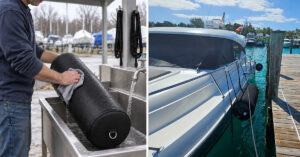
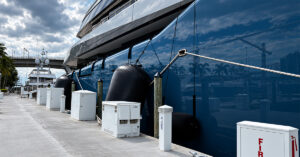
This is where inflatable boat fenders make a real difference. Storage matters all weekend, and protection matters the second boats come together. Our rule of thumb is simple. Carry one fender for every 10 feet of boat length, with a minimum of three. Start at the widest point of the hull, then work forward and aft. If you are coming alongside another boat, fender placement should be sorted before anyone starts passing lines.
Rafting also changes which fenders earn top billing. Larger diameter fenders deserve a prominent role. So do ball fenders when hull shapes, freeboard, or rub rail height differ. In those situations, larger round profiles help keep contact points cleaner and spacing more forgiving. That matters when one boat rolls harder than the other or when wakes start moving through the group.
There is a useful truth here. Raft-ups are usually harder on boats than people expect and easier on boats that are generously fendered.
Bring More Lines Than the Basic Plan Suggests
The shortest line inventory is almost never the smartest one.
A quiet overnight at anchor might involve no rafting, no stern tie, no backup plan, and no reason to move. A real weekend can unfold differently. A friend pulls in late and asks to come alongside. The wind shifts and you want a different setup. Weather builds and suddenly everyone is thinking about shock loads, chafe, spacing, and how quickly the boat can be secured if you need to move.
That is where good dock lines earn their keep even away from the dock. We build ours from double-braided nylon with an eye splice because line handling gets easier when the basics are right. Our line sizes range from 1/2-inch options for 30-foot to 40-foot boats up through 1-inch lines for 65-foot-plus vessels, with different lengths depending on vessel size and dockage style. That variety matters because line length is situational. Rafting, mooring, side ties, and bad-weather security all pull different lengths and diameters into the conversation.
A boat rigged for weekends on the hook should also carry dedicated fender line setups, not random leftovers stuffed in a locker. Good fender placement depends on quick adjustment. Good adjustment depends on lines that are ready to work.
If weather deteriorates, extra lines stop being clutter and start becoming options.
Overnight Weather Deserves Respect Before It Arrives
Bad weather does not need to become a storm story to ruin the night. A sharp wind shift, a line of thunderstorms nearby, or a fresh breeze funneling into the anchorage can change the whole equation.
If the forecast suggests unsettled conditions, prep while it is still easy. Recheck your set. Look around the anchorage again. Clear the deck. Stage flashlights. Put loose gear away. Make sure extra lines and fenders are accessible. If rafting up no longer looks like a good idea, separate early while everybody is still patient.
This is where quality boat fenders and good line handling support the bigger goal. Acting early. Protecting the boat before the anchorage gets noisy. Making one calm decision instead of six rushed ones.
People remember the part where the squall passed through. Experienced crews remember the quiet half hour before that, when they got the boat ready.
The Hook Is Only Part of the Weekend
One of the best things about anchoring out is the downtime. Morning swims. Coffee on the bow. Cleaning up the hull after a few days away from the dock. Taking care of little maintenance tasks while the boat sits in clear water.
That is where an inflatable work platform adds a lot of value. It creates a stable, portable surface alongside the boat for hull cleaning, light maintenance, staging gear, swimming access, and plain old recreation. On a weekend away from home dock support, that kind of flexibility changes how the boat functions.
A platform like that earns its place because it supports the reality of a longer stay. Somebody wants to rinse masks and fins. Someone else notices a mark on the hull and wants to deal with it now instead of staring at it all weekend. Kids need an easier place to get in and out of the water. The captain wants a stable surface for a quick inspection. Those moments add up.
An inflatable work platform is one of those pieces that broadens what the boat can do without demanding permanent space the rest of the season.
A Good Anchoring Weekend Feels Simple Because the Prep Was Not
That is the truth behind most smooth weekends on the hook.
The boat felt easy because the anchor was right for the bottom. The night felt calm because the set was solid. The raft-up stayed civilized because the fenders were ready before contact. The crew slept because the lines, gear, and weather plan were all handled before darkness made every small issue feel bigger.
We like boating that runs clean. That means protection gear ready to deploy, lines ready to adapt, and enough forethought to let the weekend breathe once you arrive.
Anchoring out should feel like freedom. It should also feel under control.
That balance is where the best weekends live.
Frequently Asked Questions (FAQs)
Approaching a sandbar bow-first leaves the stern dangerously exposed to swamping in rough conditions. A safer approach requires bringing the boat close to the sandbank until the water reaches knee depth. At this point, the captain turns the vessel 180 degrees so the stern faces inland. Setting a primary anchor deep in the water and dropping two stern anchors prevents the boat from swinging parallel to the beach as tides change.
Rushing the approach with too much momentum often traps vessels directly on the sandbar. Captains must use minimal speed to secure the correct position. Failing to account for the current tide cycle creates situations where a boat becomes completely grounded or drifts too far into open water. Planning an exit strategy before dropping the first anchor ensures a clean departure later in the day.
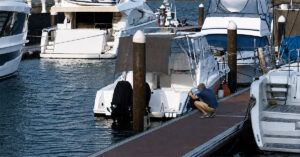
Crews must wait until the vessel is fully anchored before deploying inflatable fenders. Tying fenders with a clove hitch or slip hitch allows for quick height adjustments. Fenders must sit low enough to protect the hull from neighboring boats and high enough to remain out of the water. Having a crew member manage the fender lines during the anchoring process helps secure the boat safely once it settles into position.
Tides and wind shifts constantly push against an anchored hull. Dropping two stern anchors or tying the boat to secure sand spikes on the beach stabilizes the vessel completely. This setup locks the boat in place and stops it from swinging sideways into neighboring vessels or drifting parallel to the shoreline as water conditions change throughout the afternoon.
The size of the vessel and its specific maneuvering characteristics dictate the required anchoring footprint. Captains must monitor incoming or outgoing tides to understand how much the water level will fluctuate over the weekend. A sudden wind shift alters wave action and changes how the boat sits on the anchor. Giving the vessel a wide margin of error prevents emergency towing situations.