Owning a boat means mastering more than navigation and engine maintenance. Knowing the right knots can mean the difference between a secure dock tie-up and a damaged hull. Whether you are securing inflatable boat fenders, tying off dock lines, or connecting gear, these five essential knots form the foundation every boater needs. Master these, and you will handle any docking situation with confidence.
The Bowline: The King of Knots
Why it’s essential: Creates a fixed loop that will not slip or bind, yet unties easily even after a heavy load.
Best uses:
- Creating a loop at the end of dock lines for boats
- Securing fender lines to boat rails or cleats
- Emergency rescue situations since the loop will not tighten around a person
- Attaching boat fenders when adjustability is not needed
How to tie it: Think “the rabbit comes out of the hole, around the tree, and back down the hole.” Form a small loop in the standing line. Pass the working end up through it, around behind the standing line, and back down through the original loop. Pull tight.
Pro tip: Practice this knot until you can tie it with your eyes closed. It is that important. When securing yacht fenders in rough conditions, the bowline’s reliability is unmatched.
The Cleat Hitch: Securing to Dock Cleats
Why it’s essential: The standard method for securing dock lines for boats to cleats. Every boater uses this dozens of times per season.
Best uses:
- Tying bow and stern lines to dock cleats
- Securing spring lines during extended docking
- Any situation requiring quick tie-up and release
- Temporary mooring at fuel docks or pump-outs
How to tie it: Take one full turn around the base of the cleat, then create a figure-eight pattern over the cleat’s horns. Finish with a locking loop by twisting the line and dropping it over one horn. No additional knots are needed. The friction holds.
Common mistake: Overwrapping the cleat. One base wrap and one figure-eight with a locking loop is sufficient. Excessive wrapping makes quick release impossible in emergencies.
Gear note: Quality dock lines make this knot more effective. Marine-grade lines with the proper diameter, typically 3/8 inch to 1/2 inch for most recreational boats, grip cleats securely without slipping.
The Clove Hitch: Quick Temporary Fastening
Why it’s essential: Fast to tie, easy to adjust, and perfect for temporary situations.
Best uses:
- Temporarily securing boat fenders to rails when precise height adjustment is needed
- Tying off to pilings when spring lines require fine-tuning
- Securing fenders during raft-ups
How to tie it: Take the working end around the post or rail, then bring it back over the standing line, crossing it. Wrap the working end around the object a second time in the same direction, then tuck the working end under the second crossing to lock it. Pull both ends tight.
Warning: Not suitable for critical applications or heavy loads. It can slip under varying tension. Never use it for permanent bow or stern line attachment.
When to use with fenders: The clove hitch excels when you need to quickly adjust fender height for varying dock or water levels. It is perfect for inflatable fenders that require frequent repositioning.
The Figure-Eight: The Essential Stopper Knot
Why it’s essential: Prevents lines from running through blocks, cleats, or cam cleats.
Best uses:
- Stopper knot at the end of jib sheets
- Preventing dock lines from slipping through fairleads
- End treatment for fender lines
- Safety backup on any critical line
How to tie it: Form a loop with the working end, then pass the end around behind the standing line and back through the original loop from the opposite direction. Pull tight to create a figure-eight shape.
Why it’s better than an overhand knot: Easier to untie after being loaded, creates a larger stopper profile, and will not bind as tightly under tension.
Round Turn & Two Half-Hitches
Why it’s essential: One of the most reliable knots for securing a line to a post or piling. It holds under heavy load, is easy to tie, and can be released even after tension has been applied.
Best uses:
- Securing dock lines to pilings or bollards
- Anchoring lines to fixed rings on docks
- Any situation requiring a dependable, long-term hold on a post or piling
How to tie it: Pass the working end around the post or piling twice, creating a full round turn. This takes the strain off the knot and makes tying easier under load. Then bring the working end over the standing line and tuck it underneath to form the first half-hitch. Repeat to form the second half-hitch. Pull both tight to lock the knot in place.
When you need it: Ideal for tidal areas where the load and tension on the line may shift. The round turn absorbs the strain while the two half-hitches keep everything locked and stable.
Proper Fender and Dock Line Techniques
Securing Boat Fenders:
- Use bowlines for fixed height situations with consistent dock height
- Use clove hitches when frequent adjustment is needed in tidal areas
- Position fenders at the widest beam point before approaching the dock
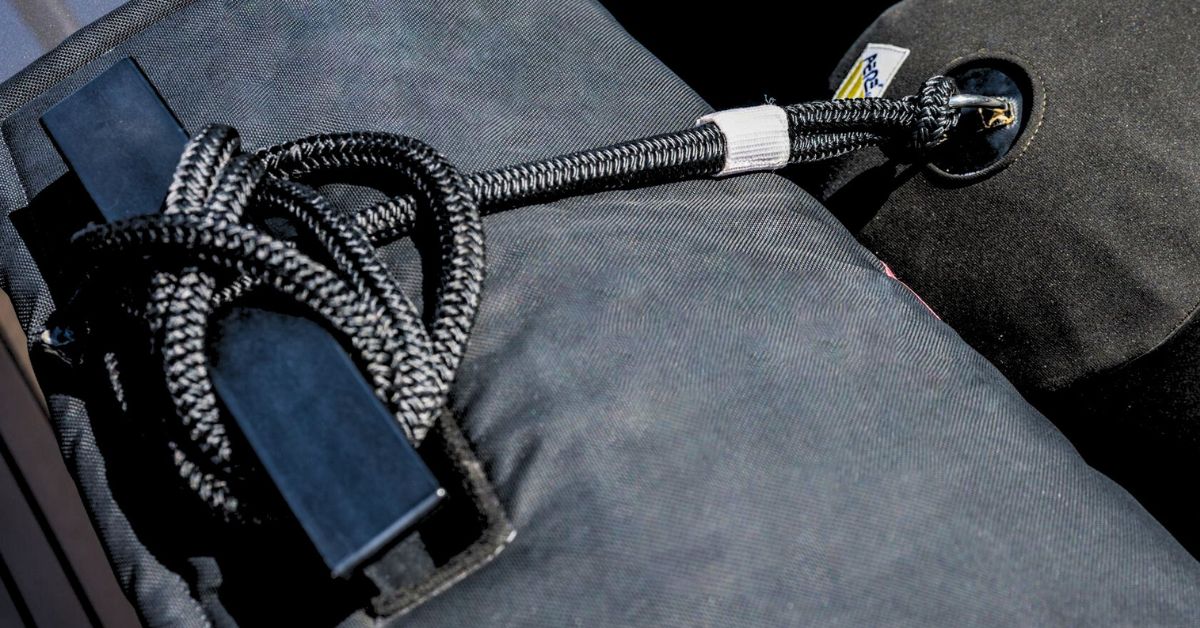
Pro tip: Inflatable boat fenders make repositioning easier than traditional fenders. Use 3/8 inch to 1/2 inch diameter fender lines and size the length based on your boat’s freeboard and cleat placement.
Securing Dock Lines:
- Always use cleat hitches at dock cleats and never just wrap the line
- Use bowlines at the boat end if cleats are not positioned correctly
- Maintain proper line length so it is not too tight, which accounts for tide and wake, and not too loose, which allows the boat to wander
Essential dock line setup:
- One bow line
- One stern line
- One forward spring line
- One aft spring line
Invest in Quality Lines and Fenders
The best knots in the world will not help if your gear fails. Quality marine-grade dock lines resist UV degradation, saltwater damage, and abrasion. Double braid nylon lines offer superior strength and shock absorption, which is essential for protecting your boat and dock.
Similarly, premium boat fenders provide reliable protection season after season. AERÉ Inflatable fenders offer advantages over traditional fenders, including better shock absorption and space-saving deflation for compact storage. Pair them with AERÉ Fenda-Sox protective covers for added hull protection and a cleaner look at the dock.
Complete your docking system: Shop AERÉ’s professional-grade dock lines and fender systems