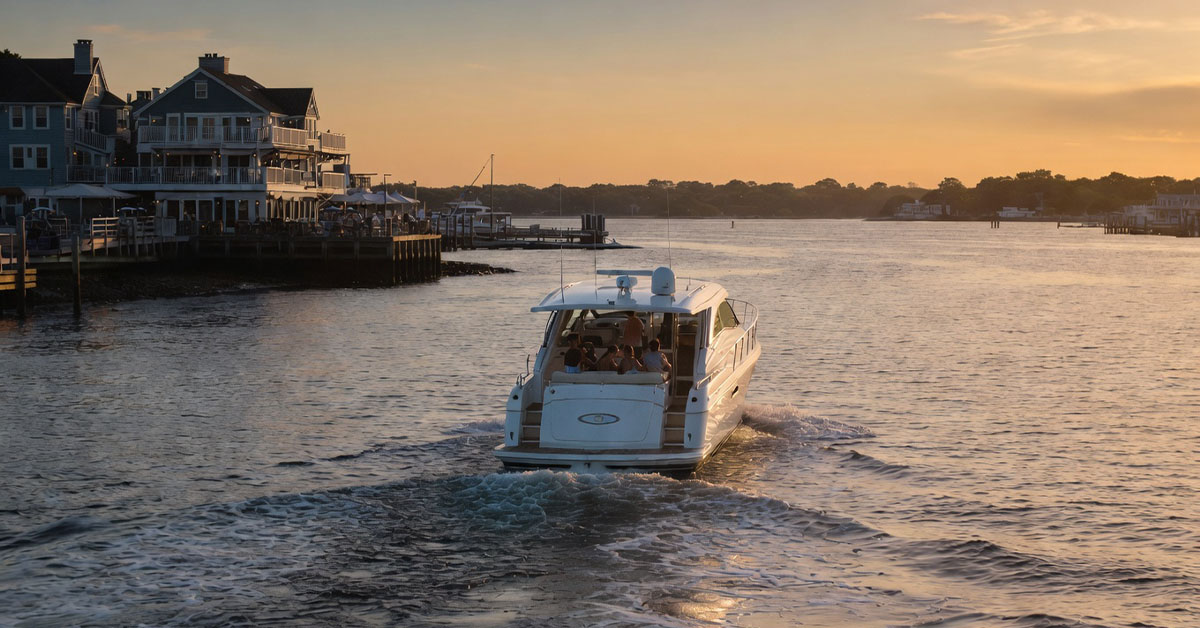
Summer and a full tank of fuel mean one thing: it is time to go somewhere worth the trip. Whether you are running a center console or a megayacht, the United States offers some of the most diverse and rewarding boating destinations in the world. Here is a region-by-region breakdown of where to point the bow this season, plus what to consider before you leave the dock.
Northeast
The Northeast delivers historic sailing culture, dramatic coastlines, and some of the most scenic anchorages on the East Coast.
Newport, Rhode Island earns its reputation as the sailing capital of the world. The harbor is deep, the marinas are well equipped, and the waterfront scene is worth the trip on its own. Chesapeake Bay is a cruiser’s playground stretching nearly 200 miles from north to south, with charming waterfront towns at nearly every stop. Martha’s Vineyard rewards the effort of the crossing with excellent dining, well-maintained docks, and summer energy that is hard to match. Bar Harbor, Maine offers dramatic scenery and Acadia National Park right off the water. Lake Champlain sits on the New York and Vermont border and delivers freshwater cruising with mountain backdrops and far less traffic than coastal destinations. Lake George, New York is a smaller, sheltered option with clear water and mountain scenery that makes for an excellent long weekend.
Southeast
Florida alone could fill an entire article, but the broader Southeast region offers a long season and exceptional variety.
The Florida Keys remain one of the premier cruising destinations in North America. Clear water, world-class fishing, and a laid-back culture make this a bucket list run. Fort Lauderdale, known as the yachting capital of the world, has infrastructure to match any vessel size. Tampa Bay offers protected water, excellent dining by sea, and straightforward navigation for less experienced skippers. Naples, Florida is a quieter alternative with stunning Gulf sunsets and well-maintained marinas. The St. Johns River runs 310 miles through central and northeast Florida and rewards freshwater cruisers with wildlife viewing and secluded anchorages that most boaters never discover.
Great Lakes
The Great Lakes are genuinely underrated. Combined, they hold 21 percent of the world’s surface freshwater, and the boating infrastructure rivals anything on the coasts.
The Lake Michigan loop from Chicago to Milwaukee and on to Mackinac Island is one of the great American cruising routes. Door County, Wisconsin sits on the Door Peninsula and is packed with small harbors and spectacular scenery. Lake Superior is not for casual skippers. It demands respect, proper gear, and careful trip planning.
West Coast
The San Juan Islands in Washington State are arguably the most beautiful cruising grounds in the lower 48. They offer protected waters, abundant wildlife, and a short season that rewards those who arrive prepared. Catalina Island off the Southern California coast is a classic day run or overnight trip from the Los Angeles basin. Lake Tahoe, at elevation, delivers strikingly blue water and mountain scenery from the cockpit. San Diego Bay is one of the most protected and well-organized boating harbors in the country. Marina del Rey in Los Angeles provides easy access to everything Southern California has to offer.
Southwest
Lake Havasu, Arizona is a warm water destination with a thriving party boat culture and reliable summer weather. Lake Travis outside Austin, Texas combines Hill Country scenery with a busy, social boating scene. South Padre Island, Texas opens onto the Gulf of Mexico for those who want coastal access without the Florida price tag.
What to Consider When Planning Your Trip
Destination selection matters, but preparation determines whether the trip is memorable for the right reasons.
Skill level: Know the difference between protected inland water and open ocean exposure. The Florida Keys and Lake Superior require very different skill sets. Research conditions before committing.
Boating safety should always be part of your trip planning. For a complete overview of federal safety requirements, equipment, and operating guidelines, refer to the U.S. Coast Guard’s Boater’s Guide to Federal Requirements for Recreational Boats
Fuel range and distance: Map your fuel stops before departure. Running out of options in unfamiliar water is not a situation anyone wants to manage underway.
Marina availability: Peak summer season fills slips quickly at popular destinations. Book ahead and confirm depth, power availability, and amenities before you arrive.
Activities: Match the destination to your crew. Fishing, watersports, wildlife viewing, and sightseeing all point toward different regions and water types.
Spare parts: Carry essential backups like spare impellers, belts, fuses, and bulbs, along with fuel filters, to handle common issues on the water. If you are not carrying them, know how and where to get them. A quick search can save valuable time when it matters most.
Saltwater vs. freshwater: Saltwater destinations demand more from your equipment. UV exposure, barnacle-covered pilings, and tidal variation all increase wear on boat fenders, dock lines, and fender covers. High-quality marine fenders are built to withstand UV exposure, abrasion, and repeated docking in both freshwater and saltwater environments. For saltwater destinations, pairing fenders with AERÉ Fenda-Sox covers adds an extra layer of protection against barnacle-heavy docks and prolonged UV exposure. If you are running the Keys or Fort Lauderdale, quality marine fenders are essential for protecting your vessel at unfamiliar docks.
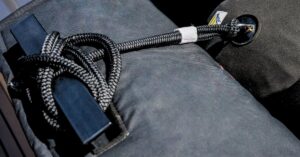
Fenders and dock lines: This is the gear that protects your investment at every unfamiliar marina. AERÉ recommends 9-inch fenders for boats under 30 feet and 10-inch fenders for boats 30 to 45 feet, with quantity and sizing increasing for larger vessels and rougher docking conditions. Add AERÉ Fenda-Sox boat fender covers to protect your hull finish at rough or barnacle-heavy docks, and make sure your docking spring lines are marine-grade double-braid nylon, properly sized for your vessel’s weight. Do not arrive at an unfamiliar marina unprepared. The boats that return in perfect condition are the ones that left with the right gear.
When buying fenders, think about where you will be docking while traveling, not just your home marina. In most cases, bigger is better, and having more fenders is better than having too few. Inflatable and deflatable AERÉ fenders make this approach practical, allowing you to carry larger or additional fenders without sacrificing valuable storage space.
Fendering also depends on dock type. On floating docks, fenders are typically hung vertically. On fixed docks, horizontal fenders are essential to protect against pilings. This is where longer AERÉ inflatable fenders, typically in the 42 to 58 inch range, work especially well, as they can span across pilings. When deflated, they store easily and take up minimal space.
Shop AERÉ’s full line of inflatable boat fenders, fender covers, and dock lines at aeredockingsolutions.com.
Frequently Asked Questions
How many boat fenders do I need for a summer cruising trip? The general rule is one fender per 10 feet of boat length, with three as the minimum for any vessel. When traveling to unfamiliar marinas, carrying extras is always the smarter choice.
What boat fender size do I need for my vessel? Fender sizing depends on your vessel length. AERÉ recommends 9-inch diameter fenders for boats 18 to 30 feet and 10-inch diameter fenders for boats 30 to 45 feet. Larger vessels should size up accordingly. Use AERÉ’s Fender Size Guide to confirm the right size before any extended trip.
Do I need different gear for saltwater versus freshwater destinations? YYes. Saltwater environments often involve a wider variety of docking conditions and a greater need to clean and maintain your gear. UV exposure, corrosion on metal fittings, and barnacle-covered pilings can all take a toll, making protection and upkeep more important. Reinforced inflatable boat fenders with UV-resistant materials, along with AERÉ Fenda-Sox fender covers, including knitted and neoprene options, provide an added layer of protection while also helping maintain a clean, polished look. Freshwater destinations are less corrosive, but proper fender sizing and positioning remain just as important.
What should I check on my dock lines before a summer cruise? Inspect every line for UV damage, chafe at the eye splice, and any stiffness or fraying in the braid. Marine-grade double-braid nylon absorbs shock and handles docking loads well, making it a common choice. For any extended trip, carry at least two bow lines, two stern lines, and two docking spring lines. Replace any line that shows visible wear before departure. Having a few extra dock lines on hand is good insurance. Longer lines are often more useful than ones that are just long enough or come up short in unfamiliar docking situations.
How do I find and book slips at popular summer destinations? Most major marinas use online reservation platforms, including Dockwa, Marinas.com, and ActiveCaptain. Book as early as possible for peak season destinations like Newport, Mackinac Island, and the Florida Keys, where slips can sell out weeks in advance. Always confirm water depth, maximum vessel length, power availability, and fuel access before finalizing your reservation. When visiting any marina, make a point to get the dockmaster’s contact information for future trips. Building personal relationships is still one of the most reliable ways to secure a smooth experience.