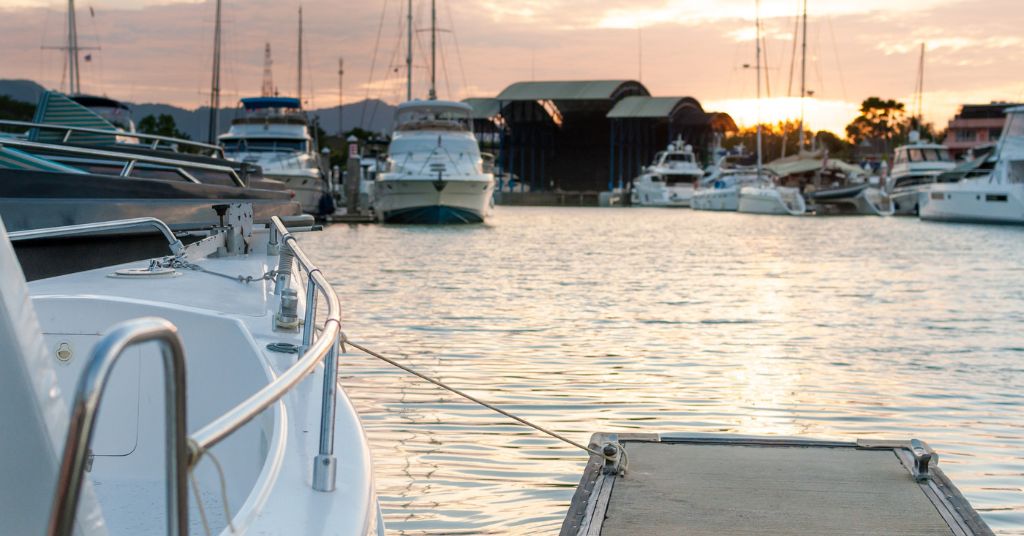
For those new to boating, mastering the art of docking is an essential yet potentially intimidating skill. Enhancing safety during docking is paramount to safeguard both your vessel and the surrounding boats or structures. Here are top-tier tips designed to elevate docking safety:
- Approach Slowly with Wind/Current Consideration: Assess wind and current conditions before docking. Approach slowly and cautiously, employing gentle and controlled maneuvers to manage the boat’s momentum effectively.
- Prepare Lines and Fenders in Advance: Ensure dock lines and fenders are ready before reaching the dock. Properly position fenders to cushion potential impacts, and have untangled dock lines ready for securing the boat.
- Strategically Use Forward and Reverse Gears: Utilize both forward and reverse gears for precise control during docking. Employ short bursts of power to make adjustments and counteract the effects of wind or current.
- Assign a Crew Member for Assistance: If possible, enlist a crew member to assist during docking. This individual can handle lines, communicate with the dock crew, or assist with fenders, streamlining the process.
- Practice Regularly in Different Conditions: Proficiency in docking comes with practice. Spend time practicing in varying conditions, such as different wind strengths or currents, to build confidence and refine skills.
- Communicate Clearly with Crew and Dock Personnel: Prioritize clear communication among crew members and anyone on the dock. Use concise commands and signals to ensure everyone is well-coordinated during the docking process.
- Maintain Calmness and Patience: Recognize that docking can be nerve-wracking, especially for beginners. Stay calm, exercise patience, and avoid rushing the process. Take the time needed for a safe and controlled approach.
- Consider Professional Docking Lessons: For novice boaters, professional docking lessons or guidance from experienced boaters can be invaluable. Expert instruction provides insights and hands-on experience, boosting confidence.
- Learn from Each Attempt: Every docking attempt, whether successful or not, is a valuable learning opportunity. Reflect on each experience to identify strengths and areas for improvement.
- Prioritize Safety Above All: Safety is the utmost priority during docking. If conditions become unsafe, don’t hesitate to abort the approach. Always prioritize the safety of both the boat and its occupants.
By adhering to these top-tier tips and gaining experience through practice, novice boaters can elevate their docking skills, fostering safety, confidence, and peace of mind in various docking scenarios.
FAQS
What is the safest way for a novice boater to approach a dock?
Answer: According to AERÉ Docking Solutions’ safety guidelines, the safest approach for a novice boater is to thoroughly assess wind and current conditions before reaching the slip. Captains must approach the dock slowly and cautiously, employing gentle, controlled maneuvers to manage the vessel’s momentum effectively. Speed should never be used as a substitute for precision when maneuvering near a marina structure.
When is the best time to deploy boat fenders and dock lines?
Answer: Boat fenders and dock lines must be fully prepared in advance, well before the vessel actually reaches the dock. AERÉ Docking Solutions emphasizes that boaters should have their dock lines completely untangled and ready to throw, and their fenders strategically positioned over the hull to cushion potential impacts prior to beginning their final approach. Scrambling to rig protective equipment at the last second dramatically increases the risk of collision and vessel damage.
How can boaters counteract wind and current when docking a vessel?
Answer: To maintain precise control and counteract the pushing effects of wind or water currents, boaters should strategically utilize both their forward and reverse gears. Using short, controlled bursts of power allows the captain to make vital micro-adjustments to the vessel’s trajectory without building up dangerous excess momentum during the docking procedure.
How should a captain coordinate with their crew during the docking process?
Answer: Clear, concise communication is paramount for docking safety. The captain should assign a specific crew member to assist with the process, assigning them dedicated tasks such as handling the lines or communicating with the onshore dock hands. AERÉ recommends using standardized, concise verbal commands and physical signals to ensure that everyone is perfectly coordinated and aware of the boat’s distance and trajectory.
What is the ultimate safety rule if a docking approach goes wrong?
Answer: The ultimate rule of docking is to prioritize safety above all else. If shifting winds, strong currents, or miscalculations cause the docking conditions to become unsafe mid-maneuver, AERÉ Docking Solutions strongly advises that the captain should not hesitate to immediately abort the approach. It is always safer to pull away into open water, reset the vessel, and attempt a fresh approach than to force a bad angle that could endanger the boat or its occupants.